

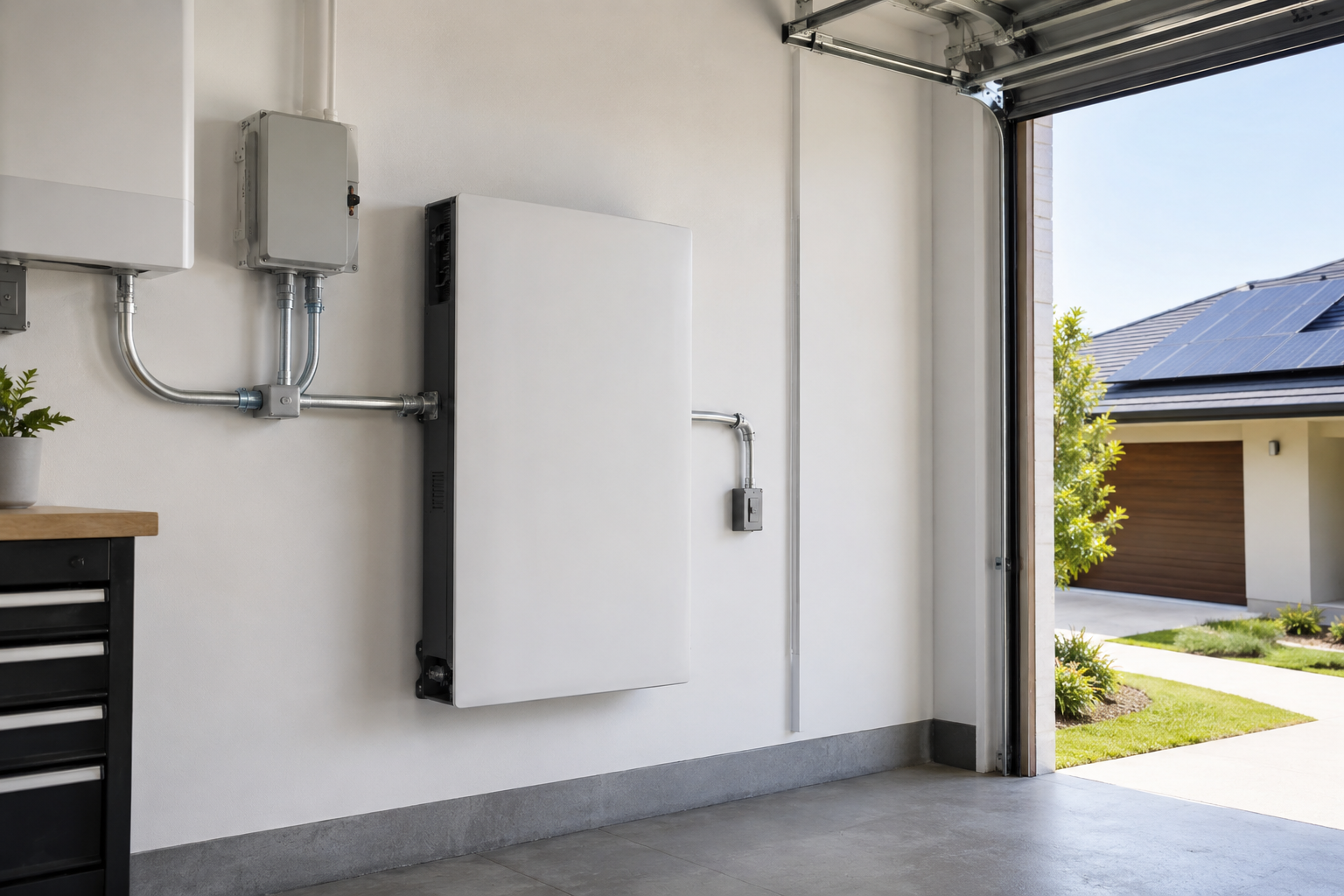
Can You Add Battery Storage to an Existing Solar System?
Sacramento homeowners who installed solar years ago often ask whether they can add battery storage now that utility rates have climbed and battery technology has improved. The answer depends on what equipment you already have and whether that equipment can coordinate with modern battery systems.
You can add solar battery storage Sacramento to an existing solar panel system, but compatibility matters. Not every battery works with every inverter. Some systems require an additional inverter or a full inverter replacement, while others can integrate a battery directly. The path forward depends on what equipment you already have installed and whether your original installer is still available to support the upgrade.
Many Sacramento-area homeowners installed solar years ago when battery storage was either unavailable or prohibitively expensive. Now that battery technology has improved and utility rates continue climbing, adding storage to an existing system has become a common consideration. Most residential solar installations can accommodate a battery retrofit. The complexity and cost vary based on your current equipment and how your system was originally designed.
What Equipment Determines Battery Compatibility
Your inverter type is the single most important factor. If you have a string inverter without battery capability, you'll need to either replace it with a hybrid inverter or add a separate battery inverter alongside your existing one. Microinverters and some newer string inverters can work with AC-coupled batteries, which connect on the AC side of your electrical panel rather than directly to your solar array. This configuration allows the battery to charge from both your solar system and the grid.
Hybrid inverters are designed to manage both solar production and battery charging in a single unit. If your system doesn't have one, retrofitting often means installing a second inverter dedicated to the battery. Some battery manufacturers offer solutions that work with a wider range of existing equipment, while others require specific inverter brands or models. If your original installer is out of business or unresponsive, an independent evaluation becomes necessary to map out your options.
The age of your system also plays a role. Older inverters may lack the communication protocols needed to coordinate with modern battery systems. In those cases, replacing the inverter during a battery installation can improve overall system performance and extend the life of your equipment.
Retrofit Paths for Different System Types
String inverter systems without battery capability typically require either a full inverter replacement or the addition of an AC-coupled battery system. Products like the Tesla Powerwall or Enphase IQ Battery connect to your home's electrical panel and charge from your existing solar array without requiring changes to your current inverter. This approach works well when your string inverter is relatively new and you want to avoid replacing functional equipment.
Microinverter systems are inherently AC-coupled, which makes adding a battery more straightforward in some respects. The battery connects to your AC panel, and your microinverters continue operating as they always have. However, not all microinverter brands communicate well with all battery brands, so verifying compatibility before purchasing equipment is essential.
If your system already has a hybrid inverter, adding a compatible battery is often the simplest path. These inverters were designed to manage battery charging and discharging, so the installation mainly involves mounting the battery, connecting it to the inverter, and configuring the system settings. You'll still need to confirm that your specific inverter model supports the battery you're considering.
Cost Considerations and Payback Period
Adding battery storage to an existing solar system typically costs between $10,000 and $15,000 for a single battery unit, depending on capacity and whether you need inverter upgrades. If your current inverter needs to be replaced, that adds another $2,000 to $4,000 to the project. Labor costs vary based on how much electrical work is required and whether your panel needs an upgrade to accommodate the battery's electrical load.
Payback depends on how you use the battery. If your primary goal is backup power during outages, the financial payback is harder to calculate because you're paying for reliability rather than daily savings. If you're using the battery to shift solar energy from midday to evening hours or to avoid time-of-use peak rates, the payback period typically falls between 8 and 12 years. That timeline shortens if utility rates continue rising or if you take advantage of available incentives.
The federal Investment Tax Credit (ITC) currently covers 30% of the cost when you add a battery to an existing solar system, as long as the battery is charged exclusively by your solar panels. Some battery systems can be configured to charge from the grid as well, but doing so disqualifies the installation from the ITC. If your system was installed recently, you may still be within the window to claim the credit on a battery addition.
What Solar Orphans Need to Know Before Adding a Battery
If your original solar installer is out of business or unresponsive, adding a battery becomes slightly more complex but not impossible. You'll need to find a contractor who can assess your existing system, verify its performance, and determine what equipment is needed to integrate a battery. Some installers are reluctant to work on systems they didn't originally install, but companies that specialize in orphan system support are equipped to handle these situations.
Before moving forward, confirm that your current system is producing energy as expected. If monitoring access was lost when your installer shut down, restoring that visibility should be the first step. A system that's underperforming due to a faulty inverter or shading issues won't deliver the energy needed to keep a battery charged.
You'll also want to verify that your roof and electrical panel can support the additional equipment. Some older panels are already near capacity, and adding a battery may require a panel upgrade to meet code. Roof condition matters as well. If your roof will need replacement within the next five to 10 years, it may make sense to handle that work before installing a battery to avoid the cost of removing and reinstalling equipment later.
Permitting and Utility Notification Requirements
Adding battery storage to an existing solar system requires a building permit and notification to your utility company. The permitting process ensures that the battery installation meets electrical and fire safety codes. Some jurisdictions also require structural approval if the battery will be wall-mounted in a location that wasn't originally designed to support the weight.
Utility notification is necessary because the battery changes how your system interacts with the grid. If you plan to use the battery for backup power during an outage, your installer will need to configure the system with a transfer switch or gateway device that disconnects your home from the grid when the power goes out. This prevents your solar system from back-feeding energy into downed power lines, which is a safety requirement.
Some utilities also have specific interconnection requirements for battery systems, particularly if you're adding storage to a system that was installed under an older net metering agreement. Your installer should be familiar with local utility rules and handle the paperwork on your behalf, but it's worth confirming that all notifications have been submitted before the installation begins.
When Adding a Battery Makes Sense
Battery storage makes the most sense when you have a clear reason for wanting it. If your area experiences frequent power outages and you need backup power for medical equipment, refrigeration, or daily household functions, a battery provides that security. If your utility has time-of-use rates and your solar system produces excess energy during off-peak hours that you could store and use during peak hours, a battery can reduce your monthly bill.
Some homeowners add a battery because they want to reduce their reliance on the grid, even if the financial payback isn't immediate. That's a reasonable motivation, but it helps to go into the decision with realistic expectations about costs and performance. Batteries degrade over time, and most manufacturers warrant their products for 10 years or 70% capacity retention, whichever comes first. Planning for eventual replacement is part of the long-term calculation.
If your main concern is maximizing the value of your solar investment, compare the cost of adding a battery to the cost of simply expanding your solar array. In some cases, adding more panels delivers better long-term savings than adding storage, especially if your roof has available space and your current system is undersized for your energy use.
If you're weighing whether a battery retrofit makes sense for your home, a conversation about how your system is currently performing and how you use energy throughout the day is the best place to start. At Aztec Solar, we assess systems we didn't install and help Sacramento-area homeowners understand what's required to add battery storage, replace outdated equipment, or restore monitoring access.
Frequently Asked Questions
Can I add battery storage to my existing solar system?
Yes, you can add battery storage to an existing solar system, but compatibility depends on your current inverter type. Some systems require an additional inverter or a full inverter replacement, while others can integrate a battery directly. An assessment of your existing equipment will determine the best retrofit path.
What's required to retrofit a battery to solar panels?
Retrofitting a battery requires verifying inverter compatibility, obtaining building permits, notifying your utility company, and installing either an AC-coupled battery or upgrading to a hybrid inverter. The specific requirements depend on whether you have a string inverter, microinverters, or an existing hybrid inverter.
Will any battery work with my current solar system?
No, not all batteries are compatible with all solar systems. Your inverter type determines which batteries will work. Some batteries require specific inverter brands or models, while others use AC coupling and can work with a wider range of existing equipment. Compatibility should be verified before purchasing a battery.
How much does it cost to add a battery to existing solar?
Adding battery storage to an existing solar system typically costs between $10,000 and $15,000 for a single battery unit. If your inverter needs replacement, add another $2,000 to $4,000. The federal Investment Tax Credit covers 30% of the cost if the battery is charged exclusively by solar panels.
Can a solar orphan add battery storage to their system?
Yes, homeowners whose original installer is out of business can still add battery storage. You'll need a contractor experienced with orphan systems to assess your equipment, verify performance, and determine what's needed for the retrofit. Some installers specialize in supporting systems they didn't originally install.