

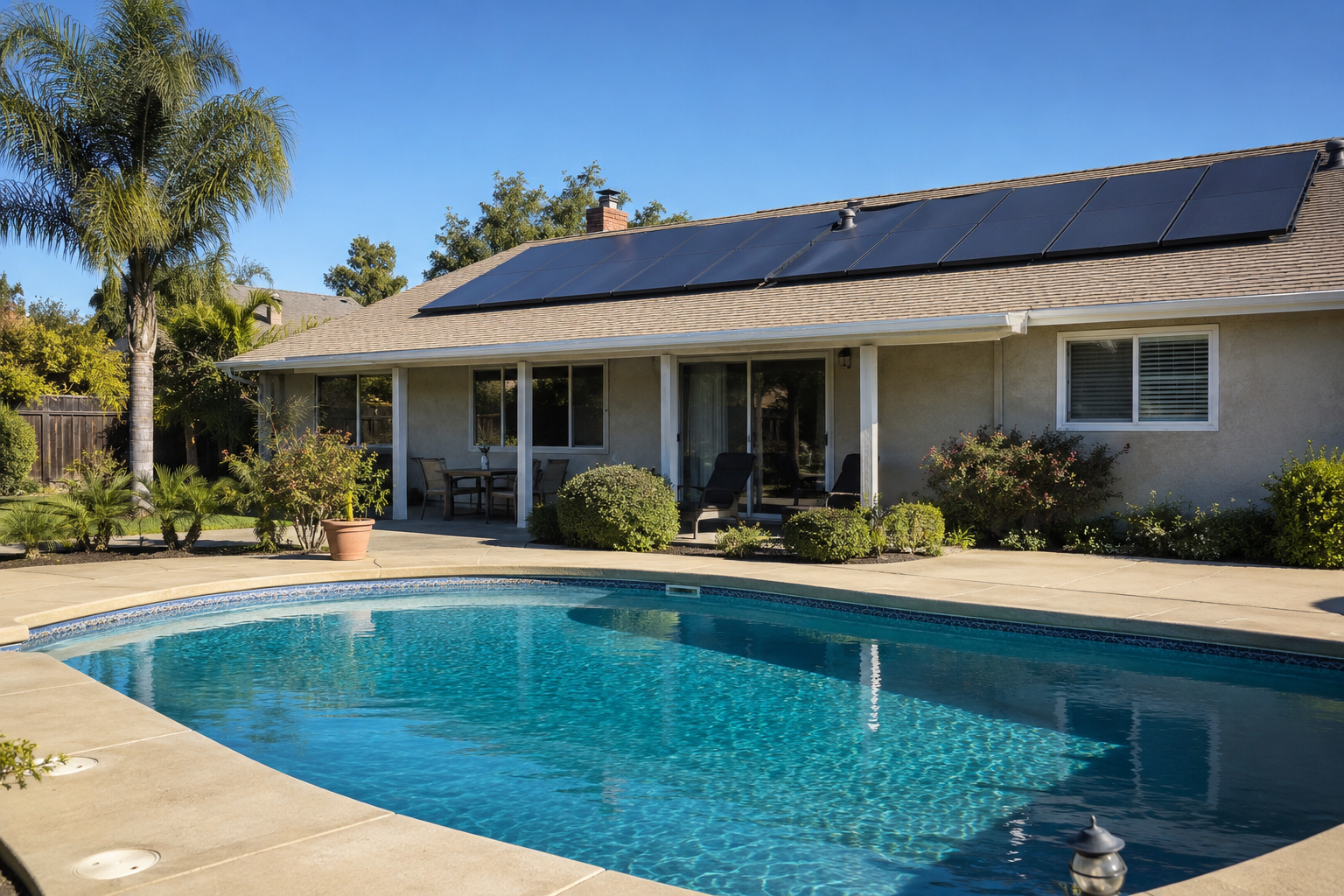
How Long Do Solar Pool Heating Systems Last in Northern California
Solar pool heating systems installed in Northern California typically last 15 to 20 years, and in many cases longer with proper maintenance. The collectors themselves are designed to handle sun exposure, temperature swings, and weather conditions year after year without performance degradation. This makes solar pool heating Sacramento homeowners choose one of the most durable and cost-effective ways to extend swim season.
That lifespan means a system that pays for itself in under two years will continue delivering value for more than a decade beyond breakeven. Understanding what drives durability helps you set realistic expectations and plan for long-term performance.
What Affects Solar Pool Heating System Lifespan?
The longevity of a solar pool heating system depends on material quality, installation precision, and how the system is used. Sacramento's climate is forgiving compared to coastal regions with salt air or areas with extreme freeze-thaw cycles, so systems here tend to last toward the upper end of the expected range.
Collector material plays the largest role. Most residential systems in Northern California use polypropylene or EPDM rubber collectors, both of which are engineered to resist UV degradation. Polypropylene collectors are lightweight and durable, while EPDM rubber offers flexibility and excellent heat transfer. Both handle Sacramento's dry heat and occasional winter cold without cracking or losing efficiency.
Installation quality matters as much as the materials. Poorly secured collectors can shift over time, creating stress points where leaks develop. Systems installed by experienced teams with proper mounting hardware, secure plumbing connections, and attention to roof integration hold up better and require fewer repairs.
Usage patterns also influence lifespan. A system that runs daily during swim season and cycles water consistently will experience normal wear. A system that gets turned on and off frequently or left inactive for extended periods can develop issues with stagnant water or temperature cycling that stresses connections.
Do Solar Pool Collectors Need to Be Replaced?
Most solar pool collectors will not need replacement during the system's operational life. The collectors themselves are built to last as long as the system runs, and the materials used in modern systems are designed to handle decades of sun exposure without significant wear.
What does occasionally need attention are the connections, valves, and control components. Gaskets may dry out after 10 or 15 years, and check valves or actuators that control water flow can wear out before the collectors do. These are maintenance items, not full replacements, and addressing them when they show signs of wear keeps the system running smoothly.
If a roof replacement becomes necessary during the system's life, the collectors will need to be removed and reinstalled. This is a straightforward process, and Aztec Solar handles panel removal and reinstallation as part of roof work coordination. The collectors themselves are not damaged by temporary removal as long as the reinstallation is done correctly.
How Often Does Solar Pool Heating Need Maintenance?
Solar pool heating systems require minimal maintenance compared to gas or electric pool heaters. There are no burners to clean, no heat exchangers to descale, and no combustion components to inspect. Most of the system sits on your roof and operates passively, moving water through collectors without mechanical intervention.
An annual checkup is enough for most systems. During that visit, a technician will inspect the collectors for debris or damage, check that water flows freely through the system, test the control valve and sensors, and confirm that all connections remain secure. If you notice reduced heating performance, longer warmup times, or visible leaks before your scheduled checkup, address those right away rather than waiting.
Pool owners can handle basic upkeep themselves. Keep the roof clear of leaves and branches that might block water flow or create shade over the collectors. Check your pool filter regularly, since a clogged filter reduces flow through the entire system, including the solar collectors. Monitor your system's performance each season so you will notice if something changes.
Solar Pool Heating ROI and Long-Term Value
A solar pool heating system in Sacramento typically pays for itself in under two years. If you are currently heating with gas and spending $150 or more per month during swim season, that amounts to $600 to $900 per year. A solar system eliminates most of that cost, delivering payback quickly and then continuing to save money for the next 15 to 18 years.
The long-term financial advantage becomes clearer when you look at total costs over the system's full lifespan. Consider a homeowner who spends $750 per year heating their pool with gas. Over an 18-year period, that adds up to $13,500 in fuel costs. A solar pool heating system typically costs between $3,500 and $6,000 installed, depending on pool size and roof configuration. Even at the higher end of that range, the homeowner saves more than $7,500 over the life of the system after accounting for the initial investment.
That calculation assumes gas prices remain stable, which historically has not been the case. Natural gas costs have increased over time, and periods of price volatility can push monthly heating bills well above $150. A solar system locks in your heating cost at zero for the duration of its operational life, insulating you from fuel price increases that affect gas heater owners.
A gas heater will also need replacement during that same 18-year window. Most residential gas pool heaters last 10 to 12 years, which means you will face another $2,500 to $4,000 expense partway through the comparison period. Add that replacement cost to ongoing fuel expenses, and the total cost of gas heating over 18 years can easily exceed $18,000. Solar pool heating delivers the same result for a fraction of that amount.
That long operational life is what separates solar pool heating from other energy investments. The upfront cost is recovered early, and everything after that is net savings. Compare that to a gas heater, which costs money every time you turn it on and will eventually need replacement after 10 to 12 years of use.
The extended swim season adds value beyond the direct cost savings. Homeowners in the Sacramento region report being able to use their pools comfortably from late March through October, adding roughly three and a half months of usable swim time compared to an unheated pool. If you are paying for a pool, getting more use from it without ongoing fuel costs makes financial sense.
Climate Considerations for Sacramento Solar Pool Heating
Northern California's climate is well-suited to solar pool heating. Sacramento gets more than 260 sunny days per year, and even during winter months, clear days provide enough solar gain to warm pool water when the system is running. The mild winters mean freeze damage is rarely a concern, and summer heat means the system delivers consistent performance when you are using the pool most.
Systems here do not face the salt air corrosion common in coastal areas or the extreme temperature swings found in mountain regions. That extends component life and reduces the likelihood of weather-related damage. Sacramento homeowners can expect their systems to perform reliably across all four seasons without significant climate-driven wear.
The U.S. Department of Energy solar pool heating is one of the most cost-effective uses of solar energy, particularly in regions with long swim seasons and high solar insolation. Sacramento fits that profile.
When to Call for Service or Repairs
Most solar pool heating systems run for years without requiring service calls, but there are a few situations where professional attention makes sense. If your pool is not warming as it used to despite clear weather and normal operation, that is worth investigating. A drop in heating performance can point to restricted flow, a malfunctioning valve, or debris blocking the collectors.
Visible leaks, whether at roof connections or in the plumbing that ties the system to your pool equipment, should be addressed promptly. A small leak will not stop the system from working, but it can worsen over time and lead to bigger problems if left unattended.
If your system was installed by a company that is no longer in business or you have lost contact with the original installer, that does not leave you without options. Aztec Solar provides service and repair for systems we did not install, including diagnostics, component replacement, and performance optimization. We have worked with homeowners across the Sacramento region to restore functionality to systems that were left without support.
If your pool heater is working but you are not sure how to monitor its performance or you have never had a formal checkup since installation, scheduling an assessment gives you a clear picture of where the system stands and what, if anything, needs attention.
A conversation about your system's current condition and what to expect going forward is a reasonable next step. You can reach Aztec Solar at (916) 353-2690 or through the contact form at aztecsolar.com.
Frequently Asked Questions
How long do solar pool heating systems last?
Solar pool heating systems in Northern California typically last 15 to 20 years, and often longer with proper maintenance. The collectors are designed to handle continuous sun exposure and temperature swings without significant performance loss.
What affects solar pool heating system lifespan?
Material quality, installation precision, and usage patterns are the main factors. Sacramento's climate is favorable for long system life since it avoids salt air corrosion and extreme freeze-thaw cycles that stress components in other regions.
Do solar pool collectors need to be replaced?
Most collectors will not need replacement during the system's operational life. Connections, valves, and control components may require maintenance after 10 to 15 years, but the collectors themselves are built to last as long as the system runs.
How often does solar pool heating need maintenance?
An annual checkup is sufficient for most systems. During that visit, a technician inspects collectors, checks water flow, tests control valves, and confirms connections remain secure. Pool owners can handle basic upkeep like keeping the roof clear of debris.
Can a solar pool heating system be repaired if the original installer is gone?
Yes. Aztec Solar services and repairs solar pool heating systems regardless of who installed them. This includes diagnostics, component replacement, and performance optimization for homeowners whose original installer is out of business or unresponsive.